Freedom on a Plate: Regional Indian Dishes That Celebrate Independence Day
There is something quietly moving about the food that shaped India’s fight for freedom. It was never about grand feasts or elaborate menus. It was about resilience, simplicity and the will to keep going even when resources were scarce. So, this Independence Day, before reaching for the usual saffron rice and tricolour desserts, it is worth pausing to understand the foods from India’s freedom movement that carry far more history than most of us realise.
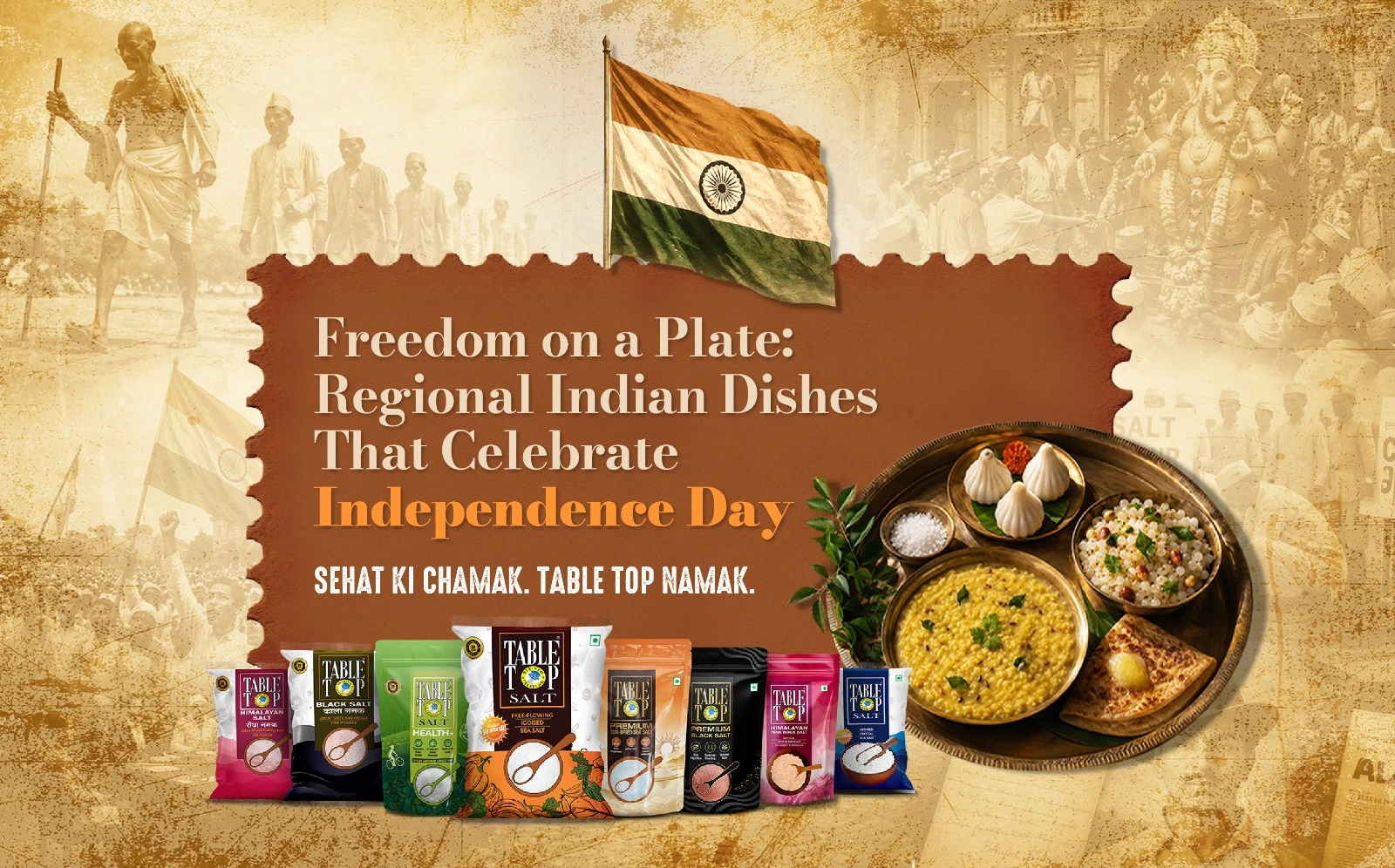
Khichdi is a fitting place to begin. During the freedom struggle, community kitchens relied on it to feed hundreds of protestors and prisoners at once, since rice and lentils cooked together in one pot could stretch to nourish hundreds with just a handful of humble ingredients. It was never about taste back then. It was about nourishment and endurance. Even today, khichdi remains one of those traditional Indian dishes that has never really left our homes, no matter how many new cuisines have entered our kitchens since.
Sabudana khichdi holds an equally important place in this story. Many freedom fighters observed religious fasts even while continuing their protests and this light, tapioca- based dish gave them the energy to keep going without breaking their fast. It is a humble dish but one that carries both devotion and determination in every spoonful.
No conversation about Indian Independence Day dishes would be complete without mentioning salt. In 1930, Mahatma Gandhi marched to Dandi because the British had taxed something as essential as salt and that single act of injustice became the spark for one of the most powerful protests in history. Producing salt from seawater with one’s own hands became a quiet yet defiant act of resistance. It is worth remembering that someone once walked nearly two hundred and forty kilometres simply to reclaim the right to make it.
This history is perhaps why the idea of pure healthy salt feels closer to our roots than we often acknowledge. There is something deeply grounding about sun dried salt, prepared slowly under the sun in coastal salt pans, much as it may have been during those very protests. No shortcuts and no artificial processes, only patience and a natural method passed down through generations.
Salt has also evolved to meet the needs of a changing India. Today, double fortified salt is helping address iron and iodine deficiency in many rural communities across the country. In many ways, it feels like a continuation of the same spirit of resilience, except this time, the struggle is against malnutrition rather than colonial rule.
Even festive food played its part in this larger narrative. In Maharashtra, Bal Gangadhar Tilak transformed Ganesh Chaturthi into a large public gathering and dishes such as modak and puran poli became part of a celebration that was quietly also an act of unity against British rule. Food, once again, became a gentle yet powerful form of resistance.
This is the true essence of Indian heritage food. It is not simply about flavour or presentation. It is about how our grandparents and freedom fighters found comfort, strength and courage in the simplest of meals during the most difficult of times.
So, this Independence Day, consider looking beyond Independence Day special food that is designed only to look patriotic. Cook something that carries genuine meaning, perhaps a pot of khichdi or a bowl of sabudana khichdi if you are observing a fast and season it with a pinch of good, honest salt. That single ingredient quietly earned its place in our kitchens long before most of us understood its true worth.
The history of Indian dishes was never written in polished cookbooks. It was written in these ordinary meals that carried an entire nation through its most challenging days.

