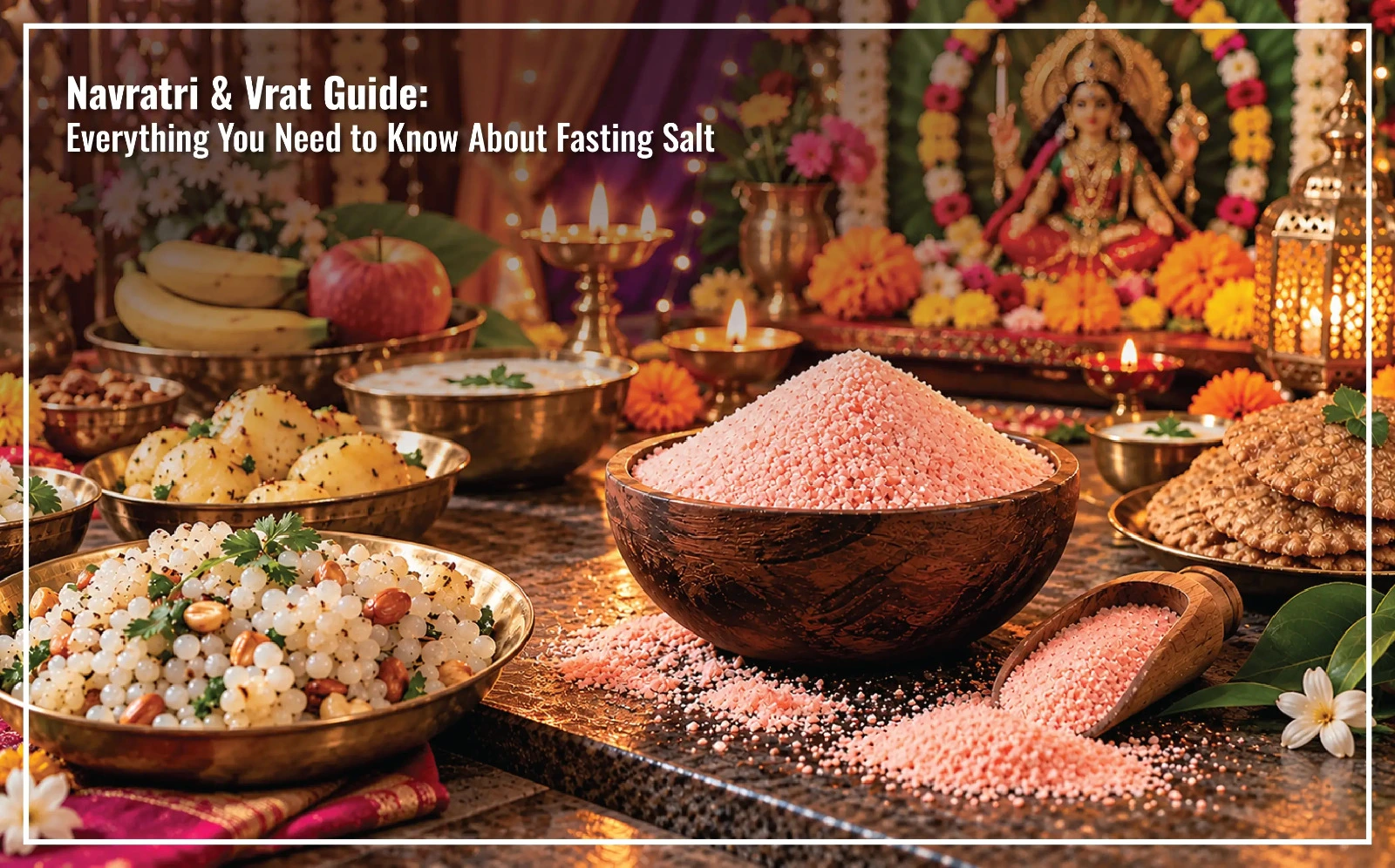
Navratri & Vrat Guide: Everything You Need to Know About Fasting Salt
Every Navratri, same thing happens in kitchens everywhere. Someone grabs the regular salt box out of habit, someone else yells from the other room, “not that one, use the fasting salt. Happens every year, don’t know why exactly, feels like it never changes. If you’ve been wondering why vrat food needs its own salt, or you’re new to keeping fasts and just confused about what’s actually allowed, read on, this one’s for you.
Short version: fasting salt is sendha namak, rock salt basically, in English. Only salt most people accept during Hindu fasting periods, Navratri included. But it’s not quite as simple as “use this jar not that one,” there’s more to it than that. Let’s actually get into it properly.
What Is Fasting Salt?
Fasting salt, that’s sendha namak, comes straight out of underground rock salt deposits, left behind from seas that dried up ages ago. Barely touched after mining honestly. No refining, no iodine, no anti caking stuff mixed in anywhere. Just salt, crushed, cleaned up a bit, pretty close to how it looked coming straight out of the ground. That’s why it’s allowed during vrat and table salt isn’t. Pretty simple once you actually break it down, even if nobody explains it that plainly.
Goes back to old fasting rules, this whole logic. The idea is you eat as simply as possible for those few days, least processed food you can manage to get by on. Table salt, though, goes through heavy refining, usually gets iodine and anti-caking agents thrown in during processing, so technically it counts as a processed item. Not a raw mineral anymore really, not by the time it hits your shaker. Sendha namak skips that whole process entirely. Closest thing to salt in its raw form you’ll find on a shelf anywhere, and that’s exactly why it fits fasting food, even if chemically it’s still mostly just sodium chloride like anything else sitting next to it.
Why Regular Salt Gets Skipped During Vrat
Trips a lot of people up, this one, and honestly it’s a fair thing to get confused about. Not that iodine’s bad for you or anything like that, it’s really about what fasting’s supposed to mean in the first place. Vrat food skips grains, processed stuff, anything that’s been through heavy manufacturing, sticks to things close to their natural state instead, as close as you can get. Table salt lands in that “processed” bucket because of the refining and the additives thrown in. Gets left out, even though there’s nothing actually wrong with eating it any other day of the year, nutritionally speaking anyway.
Fasting salt though, unrefined, still has whatever minerals it started with in there, fits the whole fasting idea a lot better than what’s sitting in your regular kitchen shaker. Some people bring up Ayurveda too, say sendha namak’s a “cooling” salt, easier on digestion supposedly, better for the body during a fast. No real science backing that particular claim as far as I’ve seen anywhere, but it’s probably part of why the tradition’s stuck around this long, passed down without much question.
Fasting Salt vs Table Salt vs Black Salt
Black salt, kala namak, that one’s genuinely tricky. Depends entirely on who you ask honestly, no single right answer here. Some families and regions allow it during fasting, since it’s mined too, counts as a mineral salt not something manufactured in a factory. Others stick strictly to sendha namak, skip black salt altogether because of how it’s processed and that sulfur smell it’s got going on. If you’re fasting and not sure, just ask your family or whoever taught you the tradition. Practices really do change a lot depending on where you’re from and how strict your household is about it.
How to Use Fasting Salt in Vrat Cooking
Buying Genuine Fasting Salt Online
Not everything labeled rock salt online is actually fasting grade, so watch out for that before you buy. Look for stuff that says “sendha namak” or straight up “fasting salt” on the packaging, which means it’s meant for religious use, not just random cooking or bath products someone’s trying to offload. Check ingredients too, should just say salt. Nothing else listed. Even an anti-caking agent technically breaks the unprocessed rule some people are strict about during Navratri, however small the amount.
A Quick Note on Health
Fasting salt’s not some health upgrade over regular salt by the way, worth saying clearly since marketing likes to imply that sort of thing. Still mostly sodium chloride at the end of the day, trace minerals that don’t really change your diet much either way, don’t let anyone tell you otherwise. Got blood pressure issues or dietary restrictions of some kind, sodium amount matters way more than which salt type you’re actually using. Don’t think switching to sendha namak means you can go heavy on it just because it feels more “natural.” Talk to a doctor if you’re not sure, especially fasting multiple days in a row and eating mostly sabudana and potatoes like most people do.
Wrapping It Up
Fasting salt’s not complicated really, once you get what it is. Unprocessed rock salt, fits the traditional Navratri and vrat rules without much fuss. Keep a jar of real sendha namak around during fasting season, check with your family on the black salt thing since that varies, and you’re basically set for every classic vrat recipe out there.


FAQs
1.Which salts are allowed during Navratri fasting?
Fasting salt, sendha namak basically or rock salt, that's the one most people accept during Navratri, pretty much across the board. Unprocessed, no iodine, no anti caking stuff in it, that's what makes it fine to eat during a fast. Regular table salt's off limits since it's heavily refined, counts as processed, not something you'd touch during a strict vrat.
2.Is black salt allowed during fasting?
Depends who you ask, honestly no single answer here. Some households and regions do allow kala namak during fasting, it's mined too after all, not manufactured exactly. Others stick strictly to fasting salt, skip black salt entirely because of how it's processed and that sulfur smell. Not sure yourself? Just check with your family instead of guessing, this one genuinely varies a lot house to house.
3.What's the difference between fasting salt and regular iodised salt?
Fasting salt's sendha namak, mined, barely processed, no iodine or anything else mixed in. Regular iodised salt goes through heavy industrial refining, gets iodine added back in on purpose, and has been standard practice for decades now. That processing's exactly why iodised salt's not used during vrat, while fasting salt, being closer to its raw state, gets the green light.
4.Where to buy pure sendha namak online?
Look for listings that actually say "sendha namak" or "fasting salt" instead of just generic rock salt, and double check salt's the only thing listed as an ingredient, nothing else snuck in. Grocery sites that specifically stock vrat and fasting items tend to be more reliable than some random rock salt listing that could honestly be meant for anything, cooking or bath salts or who knows what.
5.Can I use fasting salt in everyday cooking, not just during vrat?
Yeah, nothing stopping you really, if you like how it tastes or just want something less processed year round. Works in recipes basically the same as table salt would. Some people just keep sendha namak as their everyday salt, skip table salt entirely, and it comes down to preference at the end of the day.
6.Does fasting salt taste different from regular salt?
A bit, though it's subtle for most people honestly. Fasting salt reads milder, less sharp compared to iodised table salt usually, sometimes with a faint earthy note depending where the sendha namak's actually sourced from. Once it's cooked into something, the difference gets pretty hard to pick out either way, even for people who cook it often.