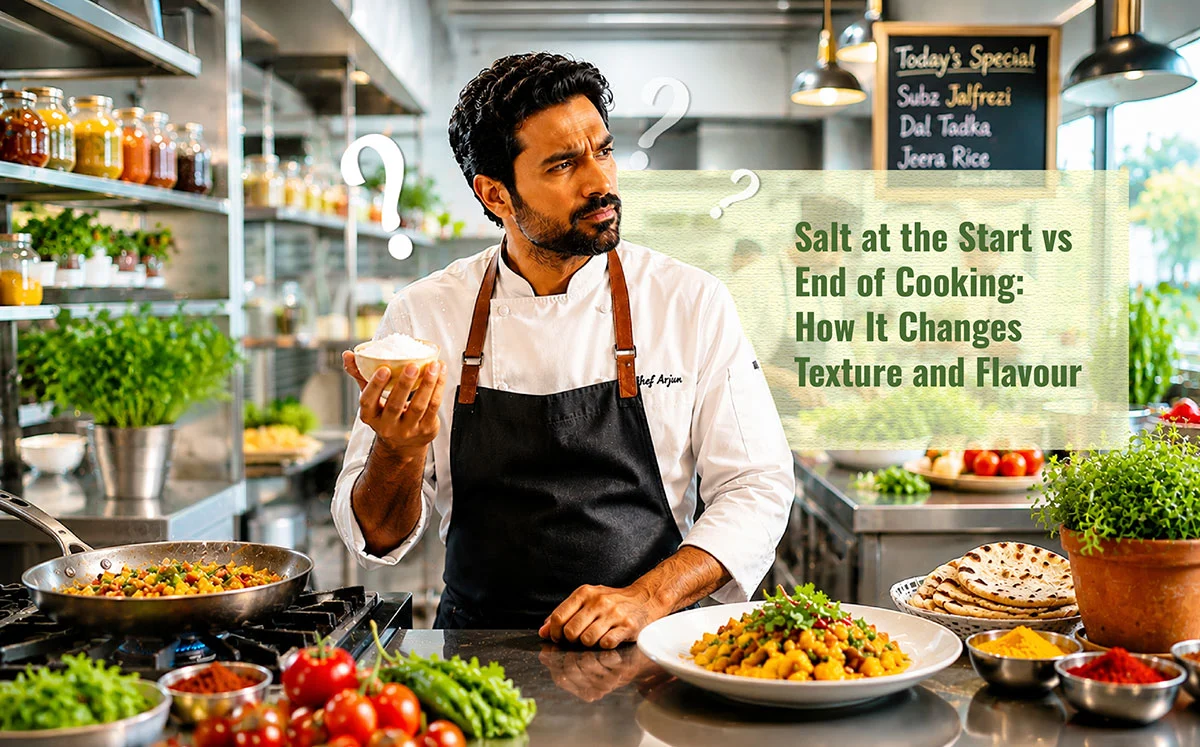
Salt at the Start vs End of Cooking: How It Changes Texture and Flavour
Every family has that one person who cannot stop tasting the food while cooking.
The curry is simmering, dinner is twenty minutes away and they have already tasted it five times. They are standing at the stove with a spoon in one hand and zero plans to stop. In most Indian homes, this person is a parent and honestly, everyone already knows what comes next.
“Something is missing.”
The salt container opens before the sentence is even finished.
For something that spends its entire life sitting quietly in the kitchen corner, salt manages to create a remarkable amount of drama. Too little and someone notices at the first bite. Too much and the family discusses it through the entire meal. Forget it completely and that one incident somehow survives in conversation for years.
Most people only understand this after they start cooking on their own. The recipe is followed carefully, the ingredients are right and the dish looks exactly as it should. But it still does not taste like home.
The reason is usually something nobody thinks to ask about.
Timing.
Watch someone who has been cooking for decades and a clear pattern emerges. They are making small, almost automatic decisions throughout, for example, when to add salt while cooking. In curries, dals and sabzis, salt often goes in far earlier than most people would expect. Not because a recipe instructed them to do so, but because years at that stove quietly taught them what gets lost when they wait too long, one of the most valuable salt cooking tips a cook can learn.
Nobody explains this while it is happening. They are usually occupied telling someone to step away from the pan.
When salt is added early, onions soften more readily, vegetables release their moisture and flavours gradually settle into one another. It all happens in the background, without announcement, while the rest of the house goes about its day.
Some foods, however, tell a different story entirely.
Pakoras on a rainy evening, roasted potatoes that disappear almost immediately or cucumber slices where someone is insisting they will only have one piece. These do not need salt worked into them during cooking. They need it right at the end. A light sprinkle just before eating and suddenly every flavour feels sharper and more alive.
This is where finishing salt vs cooking salt becomes two genuinely different conversations. One builds flavour gradually from within. The other arrives at the last moment and brings everything into focus.
The types of salt being used matter here as well. Different salt types for cooking dissolve differently, distribute flavour differently and leave behind noticeably different results. Some disappear entirely into a slow-cooked curry while others remain distinct right until the final bite.
Among the many types of salt for cooking found in Indian kitchens, fortified salt is the consistent everyday presence. It shows up in the hurried weekday dinner, the carefully made festive meal and the dish that has never existed as a written recipe because it has always lived in someone’s hands instead.
But this is never truly just about salt.
It is about the tasting spoon that never rests, the quiet debate over whether the sabzi needs one more pinch, the person who adds a final sprinkle after everyone agrees the food is ready and turns out to be right. These small, unhurried moments are what actually make a meal feel like something worth remembering.
Because the difference between food that is simply good and food that genuinely stays with you is rarely about one dramatic ingredient. It is usually one small decision, made at exactly the right time, like knowing when to reach for the salt.

