The Salt Trick To Remove Bitterness From Vegetables
Do vegetables always end up being the last thing on your plate?
Do you want the health benefits of vegetables but not the bitter taste?
There’s a simple fix, and it’s already in your pantry.
Salt!
Most people think of salt as a simple seasoning, but it does so much more. It enhances flavour and helps tone down the bitterness, making vegetables more delicious.
How does Salt Reduce Bitterness?
If you’ve ever wondered, why does salt reduce bitterness? It’s all in how salt taste receptors work.
Salt reduces bitterness by blocking taste signals that make the food feel bitter. Even a small amount of salt can make vegetables taste milder. Salt also helps bring out the natural flavours in food, making their sweeter and more pleasant flavour stand out. This is why food becomes more enjoyable to eat after being lightly salted.
Salt and bitter taste are connected in more ways than one. Salt improves the texture of certain vegetables, making them more enjoyable and tricks the brain into enjoying it.
How Salt Enhances Flavour in Bitter Vegetables
Now that you know how salt affects taste, let’s look at some simple ways to use salt for bitter food.
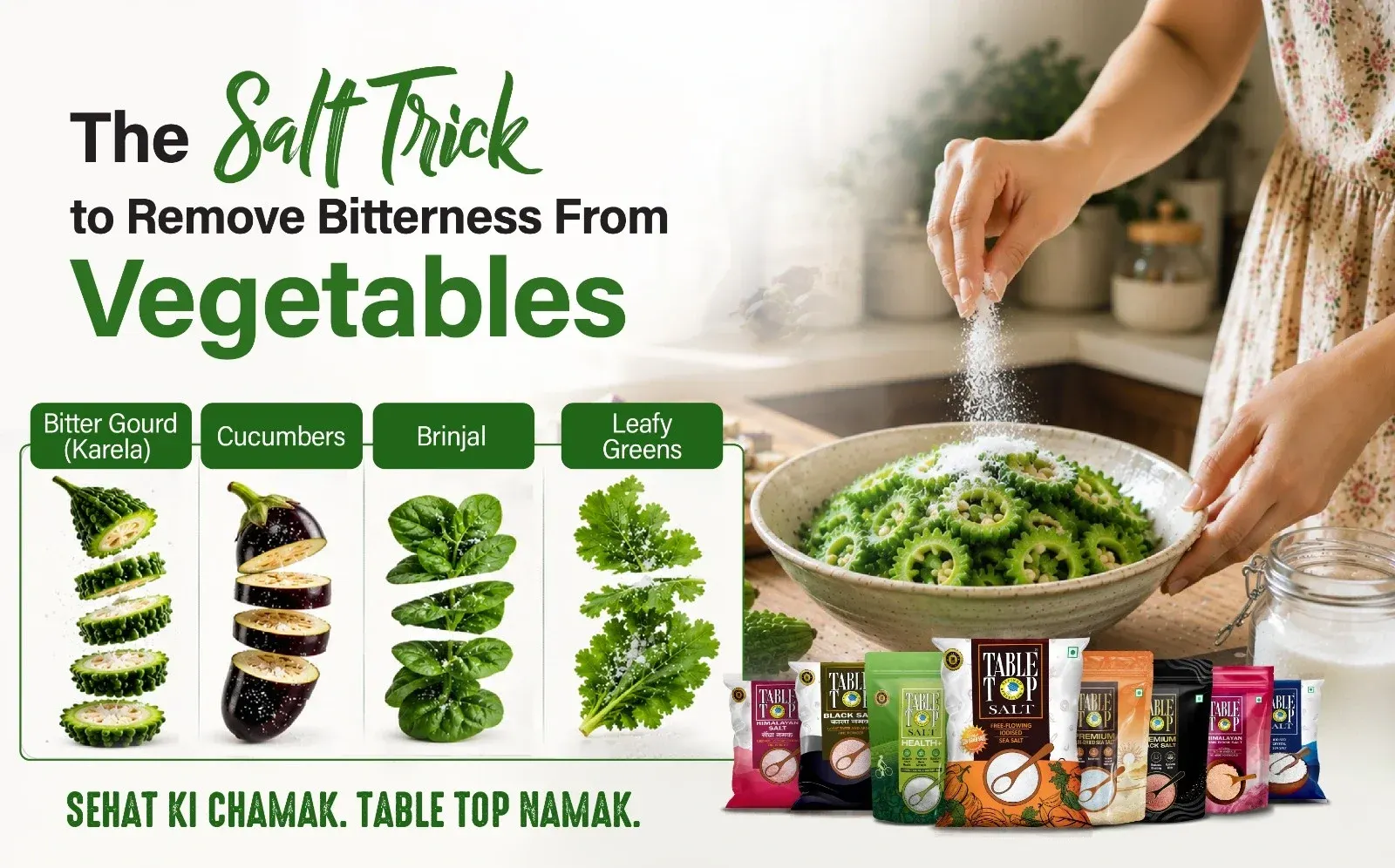
- ● Bitter Gourd (Karela)
Slice the karela, scrape out the white pith and generously rub it with Table Top rock salt or sea salt. Then, place it in a covered bowl and leave it for about 30 minutes. Wash off the salt and firmly squeeze out the dark liquid. This helps remove some of the bitter compounds, leaving the karela milder in taste.
- ● Cucumbers
- ● Brinjal
Cut the eggplant into slices or cubes, sprinkle a generous amount of salt over both sides. Leave it for 20 to 30 minutes. The salt will draw out excess moisture along with some of the bitter compounds. Rinse under cold water, pat it dry and then cook. This also helps the vegetable absorb less oil.
- ● Leafy Greens (Palak, Mustard Leaves)
If you are eating palak raw, sprinkle a little salt over the chopped greens and gently massage till the leaves soften. If you want to eat it cooked, boil the greens in salted water for 3 to 5 minutes, then drain them. This helps remove some of the bitter compounds, resulting in a milder flavour.
Why Choosing the Right Salt Matters?
Salt is one of those kitchen essentials that we use every day without giving it much thought. Yet, it plays a bigger role than making food taste better. From balancing flavours to reducing bitterness, the types of salt for cooking you choose can make a difference to your dishes and health.
Table Top Salts stands out as a trusted choice for everyday cooking.
Choosing the right salt types for cooking can help enhance flavour, improve texture and bring out the natural taste of your ingredients.
The right salt elevates every meal.
The history of Indian dishes was never written in polished cookbooks. It was written in these ordinary meals that carried an entire nation through its most challenging days.

