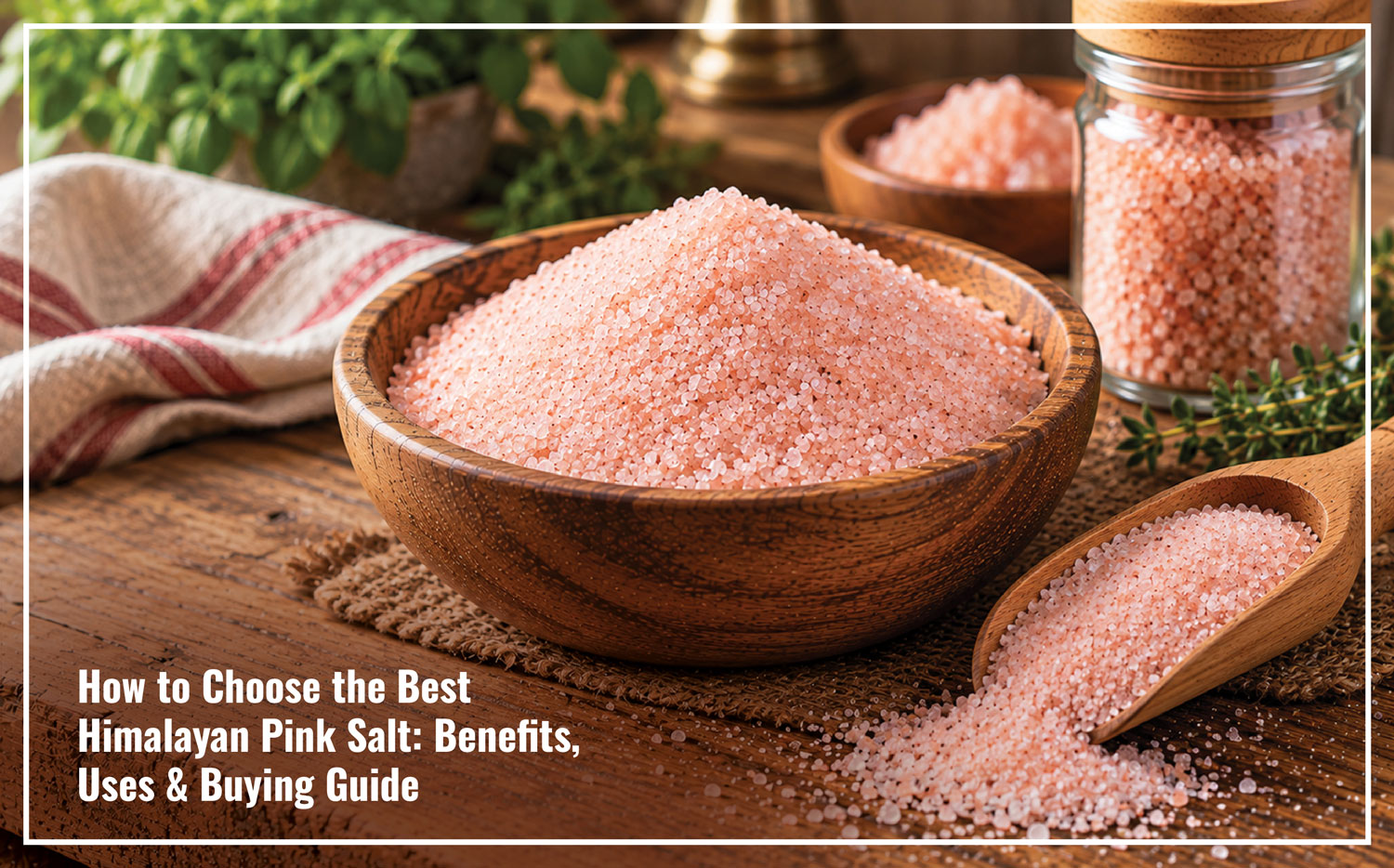
How to Choose the Best Himalayan Pink Salt: Benefits, Uses & Buying Guide
Everyone’s got a jar of Himalayan pink salt in their kitchen now. It’s on every wellness blog too. But start actually shopping for the best himalayan pink salt, and you’ll realize something fast: not every pink crystal on that shelf deserves the price tag on it.
A good amount of it really does come from ancient salt deposits in Pakistan. But plenty is just plain salt with a little colour thrown in, sold for triple the price because, well, pink sells. Figuring out which is which is basically the whole game.
What Exactly Is Himalayan Pink Salt?
It’s rock salt. Mined near the Khewra region in Pakistan, from deposits that formed millions of years ago when ancient seas dried up and left mineral-rich salt behind. That pink colour? Trace iron oxide, trapped inside the crystal same reason rust looks reddish. More iron oxide means deeper pink, that’s it.
Chemically it’s still mostly sodium chloride, same as the table salt sitting next to it in most kitchens. Sure, there are trace minerals iron, magnesium, calcium, potassium. But the amounts are so small they barely move the needle nutritionally. They’re technically there. Just don’t expect them to do much.
Pink Rock Salt vs Regular Rock Salt vs Table Salt
People mix these terms up constantly, so here’s the actual breakdown:
- Rock salt – this is the umbrella term. Any salt mined straight from underground deposits, rather than evaporated from seawater. Could be white, grey, or pink, depending on where it comes from.
- Pink rock salt – usually this just means Himalayan salt, or something close to it, with that same iron-oxide tint.
- Table salt – refined heavily, most trace minerals stripped out, then usually iodised before it hits shelves.
So if you’re shopping for pink rock salt specifically, you’re already narrowing it down to that one pink variety mined out of the Himalayan foothills or somewhere similar.
What Actually Makes One the Best Himalayan Pink Salt
Not everything with “Himalayan” printed on the label earns that name. Here’s what tends to separate the best himalayan pink salt from stuff just coasting on the branding:
- It actually traces back to the Khewra Salt Mine or the Punjab region in Pakistan
- Processing is minimal – crushed, sized, nothing more
- The colour looks naturally uneven, not perfectly uniform
- No pointless additives – real salt doesn’t usually need anti-caking agents
What the Colour Actually Tells You
Pale pink, deep rose, whatever shade lands in between it all just comes down to how much iron oxide got trapped when the salt formed. Darker doesn’t mean better. It means more iron oxide. That’s the whole story. So don’t pay extra just because a batch looks more dramatic. Check where it’s from and how pure it is instead.
Grain Size Pick Based on What You're Cooking
Fine grain is your everyday workhorse dissolves fast, good for baking, quick seasoning. Coarse grain is better in a grinder, or for finishing a dish, or curing meat. Then you’ve got the big chunks and slabs, which get heated up so you can sear food right on the surface for a nice crust. Choose based on what you’re actually making, not because a chunkier crystal looks more impressive sitting on your counter.
Checking Purity and Source Before You Buy
Real pink rock salt will say where it’s from usually Pakistan, often specifically Khewra. If the label’s vague about origin, that’s a red flag worth paying attention to. And be a little skeptical of that “84 minerals” claim you’ll see plastered everywhere. Actual testing rarely backs that number up in any way that matters.
Reading the Label Without Falling for Marketing
“Pure.” “Unrefined.” “Ancient.” These words get slapped on nearly every bag regardless of what’s actually inside. What matters is a clear origin, no artificial additives, and a grain size that matches what you’re planning to do with it. And don’t assume a higher price means better quality sometimes it just buys nicer packaging.
Health Benefits What's Real and What's Overstated
Here’s what’s true: it’s less processed than table salt, so if you’re avoiding iodine or other additives, it’s a fine alternative. Also true: the sodium content is basically identical to regular salt, so no, it won’t do anything for blood pressure. That claim doesn’t hold up, no matter how often it gets repeated.
And the mineral content? Wildly oversold. The amounts are too tiny to actually change anything in your diet. If you’re buying the best himalayan pink salt expecting some kind of health upgrade from its minerals, it’s worth resetting that expectation now. It’s salt. Nicer-tasting, less processed but still salt.
Everyday Kitchen Uses
Use it exactly how you’d use table salt, in cooking or right at the table. It’s especially good as a finishing salt sprinkled over roasted vegetables, grilled meat, even chocolate desserts, where those coarser crystals add a little crunch and texture. A lot of people just prefer the milder flavour compared to heavily processed salt, too.
Beyond the Kitchen
Salt lamps made from bigger pink rock salt chunks are popular mostly for the warm glow they give off, not because of any proven air-purifying effect that part’s mostly marketing. Bath soaks use crystals dissolved into warm water. Salt blocks get used for cooking or even for serving food chilled. None of it’s essential, but it explains why pink rock salt has found its way well past the kitchen.
Storing It Properly
Keep it dry. That’s really it. Unlike iodised salt, it doesn’t need protection from light, but damp conditions will still clump it up. An airtight jar handles the job just fine no need to overthink storage.
What You're Actually Paying For
Prices swing wildly for what’s often a pretty similar product underneath. Bulk-mined, minimally processed rock salt is cheap at the source most of what you’re paying for at retail is grinding, packaging, and branding, not the salt itself. Paying more for better sourcing or consistent grain size, sure, that makes sense. Paying triple for a fancier jar around the same salt? Not really.
A Quick Checklist Before You Buy
- Origin clearly stated on the label
- Grain size that fits how you’ll actually use it
- No unnecessary additives
- A price that makes sense for the amount, not inflated by packaging
- Colour that looks natural, not artificially even
Best Himalayan Pink Salt for Different Uses
The best himalayan pink salt for your everyday cooking spoon isn’t the same as the best himalayan pink salt for a salt-block dinner party, or for sitting on your bathroom shelf. Fine, food-grade crystals work for daily meals. Coarser, chunkier pieces suit slabs, grinders, decorative jars. Buying for more than one purpose? Just grab two different grades instead of forcing one bag to do everything.
Gifting’s its own thing entirely. A lot of what’s marketed as the best himalayan pink salt for gifts is really just standard salt dressed up a wooden box, a fancy grinder, a ribbon. Nothing wrong with that. Just know you’re paying for the presentation, not a different product underneath.
Common Mistakes People Make When Buying It
Thinking deeper pink automatically means purer salt. It doesn’t that’s just iron oxide, not quality.
Buying purely on health claims. Mineral content and blood-pressure benefits get exaggerated in product descriptions constantly, and most of it falls apart under any real scrutiny.
Not thinking about grain size until after buying. A slab meant for finishing dishes isn’t much help if what you actually needed was fine crystals for regular cooking.
Paying for the name on the jar instead of where it actually came from. Recognisable branding tells you nothing about sourcing.
The Bottom Line
Finding the best himalayan pink salt was never about chasing the deepest pink or the fanciest jar on the shelf. It’s about knowing what you’re actually buying genuine pink rock salt, properly sourced, in a grain size that fits how you’ll use it. Skip the mineral-count marketing, read the label instead, and you’ll end up with rock salt that’s genuinely worth the switch not just prettier packaging wrapped around the same thing you already had.


FAQs
Chemically, both are mostly sodium chloride. The difference is processing: pink salt is mined as rock salt and left largely unrefined, while table salt is heavily refined and usually iodised. The pink tint simply comes from traces of iron oxide.
Fewer than the marketing suggests. It skips the additives found in table salt, but its sodium content is nearly the same, so it won’t help with blood pressure. Its trace minerals are too small to make a real difference. It’s simply a milder, less processed salt.
Check the label for a clear origin, ideally Pakistan’s Khewra mine. Be wary of vague sourcing or big “84 minerals” claims. Look for minimal processing, slightly uneven colour, and a grain size that suits your cooking.
Yes, in most Hindu vrat traditions. Himalayan pink salt is a type of sendha namak (rock salt), which is preferred during fasts because it’s unrefined and free of additives. Practices vary, so check with your own tradition if unsure.
It doesn’t go bad, since it’s a mineral. The only risk is moisture, which causes clumping. Store your best Himalayan pink salt in an airtight jar on a dry shelf and it will last indefinitely.
Often, yes, as long as the sourcing is clear. Bulk pink rock salt usually costs less per kilo. But if a bag sold as the best Himalayan pink salt doesn’t state its origin, buying more of it doesn’t make it more trustworthy.